Are the Crocodiles a Wild Show on the Jumping Crocodile Cruise? It’s the first thing people ask me when they join a Jumping Crocodile Cruise out of Darwin – usually with a white-knuckle grip on the railing for dear life.
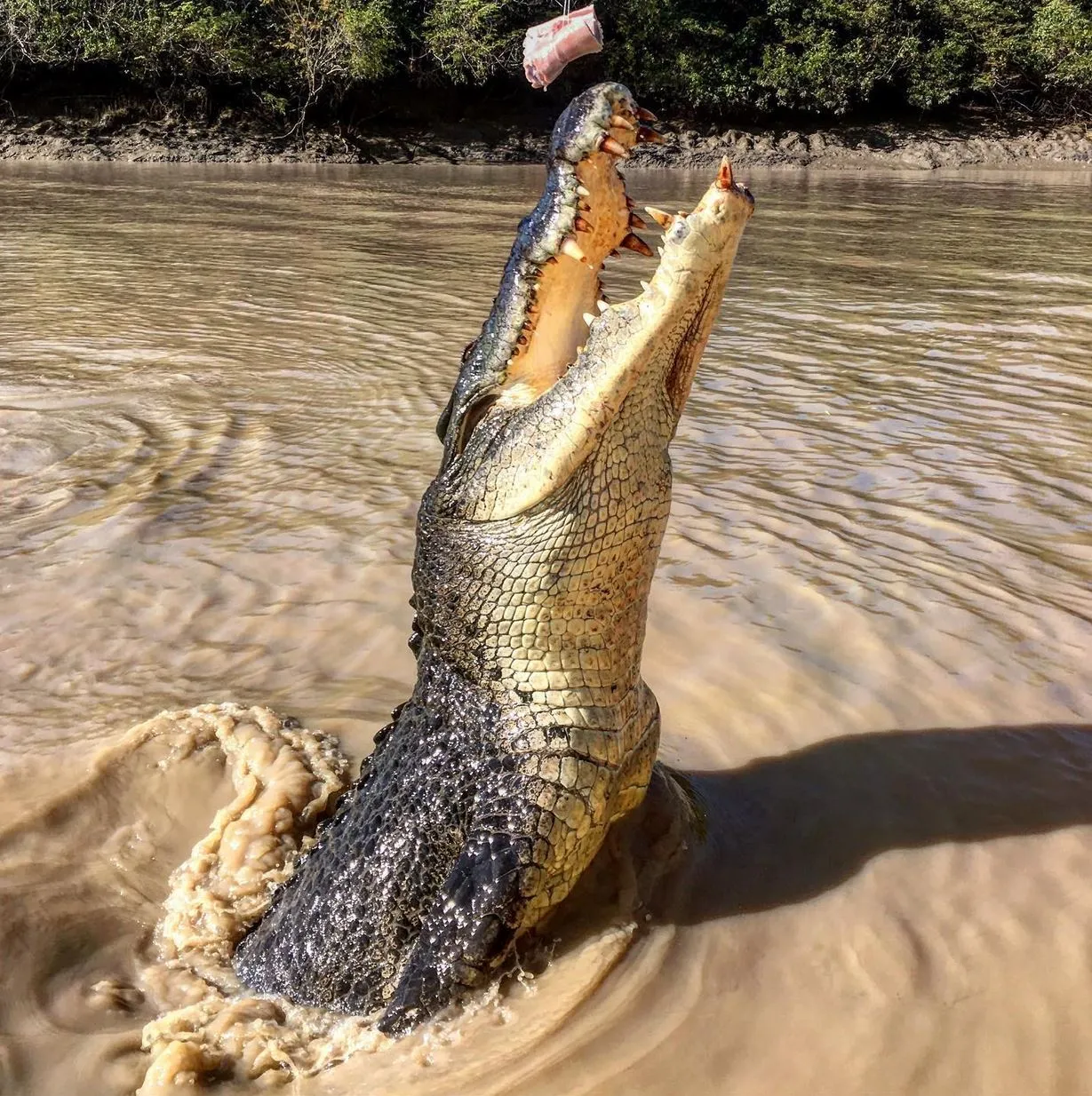
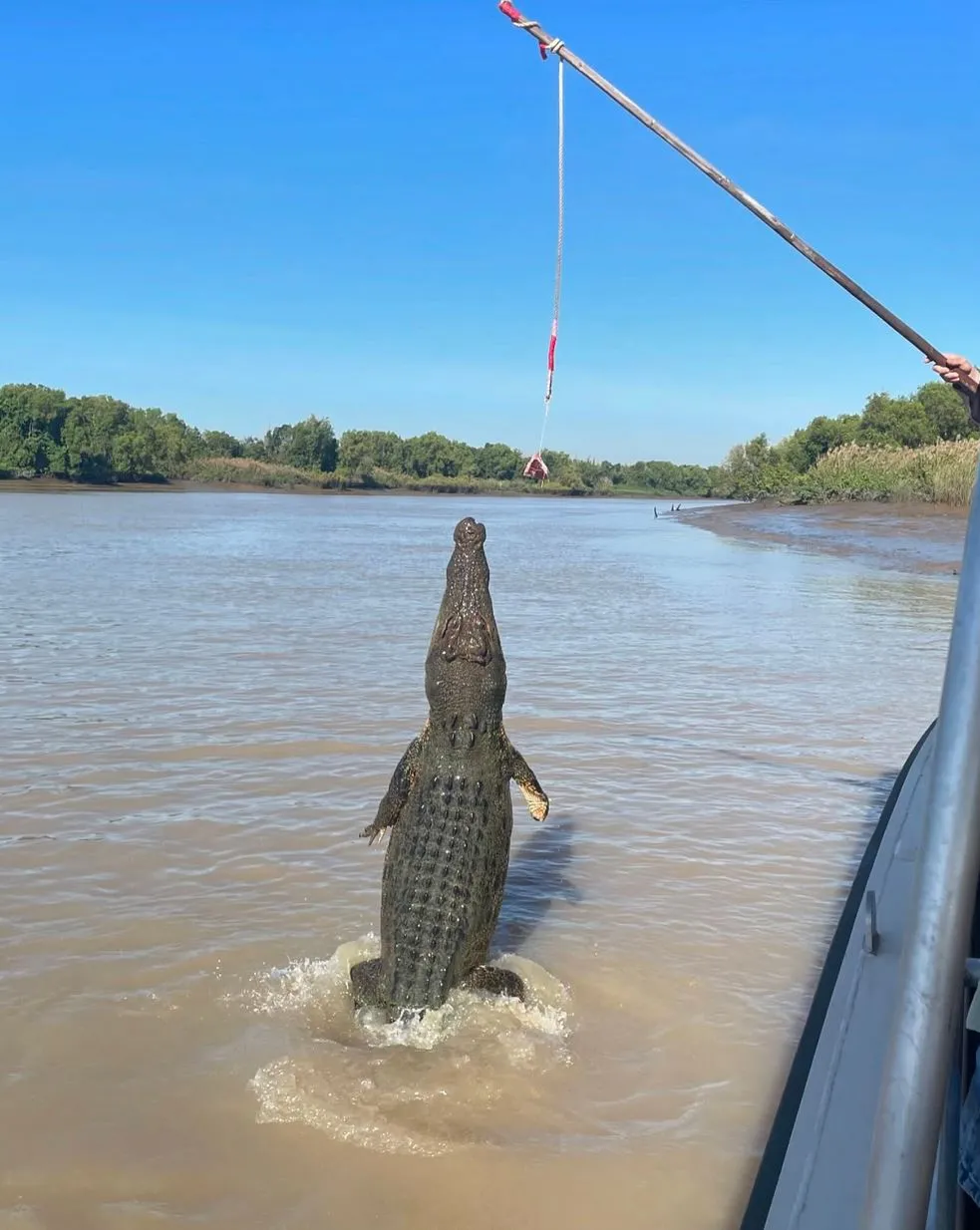
And fair enough – when a 5 metre saltwater crocodile bursts almost entirely out of the Adelaide River, it’s like something that couldn’t have been rehearsed to save its life – not even over a series of weeks with a stern lecture.
Truth is, though, these crocs are as wild as the NT itself – ancient, territorial and not bothered in the least with taking orders from a tour operator.
When I first started leading groups through this part of the Top End, an old bull lunged half his body out of the water and sent a whole tour group scurrying for cover like a bunch of startled wallabies.
That moment told me everything I needed to know: there’s no such thing as a ‘trained croc’.
What you see on a Jumping Crocodile Cruise – or any of the river cruises in that area – is just the real deal—pure, unadulterated croc biology on show.
And you know what? That’s what makes it such an unforgettable wildlife experience.
Contents
- 1 Natural Croc Launch Behaviour
- 2 Meet Adelaide River’s Apex Predators
- 3 What to Expect on an Adelaide River Wildlife Cruise
- 4 The Ethics of Wildlife Tours, Plain and Simple
- 5 Table: Common Assumptions vs Croc Reality
- 6 Why Adelaide River Is a Natural Classroom
- 7 How Safe Is It Really?
- 8 Wildlife Beyond the Big Lizards
- 9 Choosing the Right Tour Operator
- 10 Local Tips From Years on This River
- 11 Final Reflections
- 12 FAQ
- 12.1 Are the crocodiles on the Jumping Crocodile Cruise in any way trained?
- 12.2 Is a Jumping Crocodile Cruise from Darwin really safe?
- 12.3 What species of crocodile can I expect to spot on a trip?
- 12.4 Do the tours have any impact on the crocodile behaviour?
- 12.5 What else am I likely to see on a Jumping Crocodile Cruise?
Natural Croc Launch Behaviour
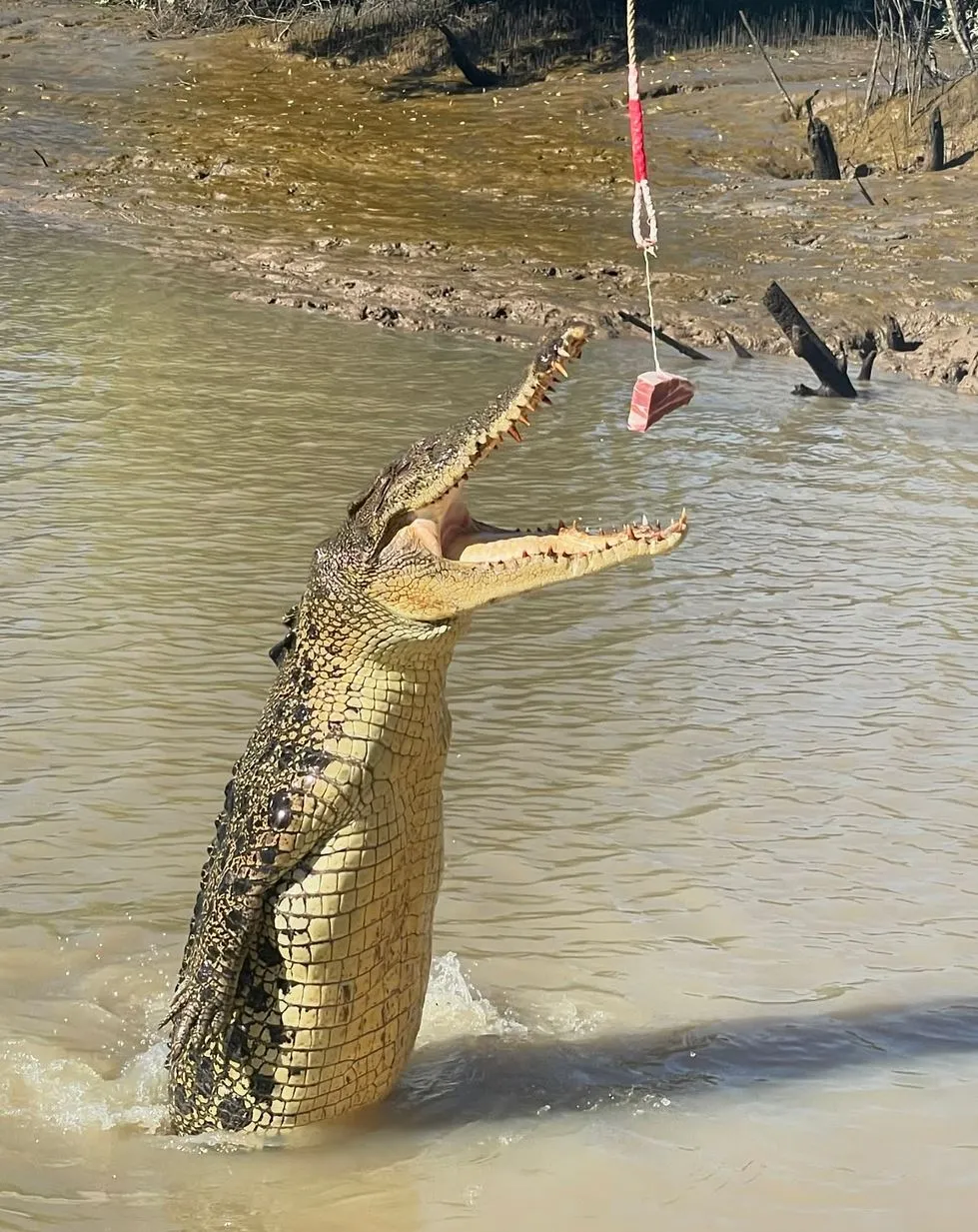
Crocodile jumping isn’t just a party trick.
It’s a hunting technique that was evolved by the Estuarine crocodiles – the salties that rule the Top End.
They’ve developed the ability to burst vertically out of the water to grab birds, flying foxes, or anything else low over the river.
So when a wildlife expert holds up some buffalo meat, they’re not ‘teaching’ anything.
Theyre just triggering a behaviour that the crocs have always used :
- Ambush from below ( they lie in wait for unsuspecting prey to come along )
- Vertical strike in shallow water ( i.e jump up to grab unsuspecting prey )
- Precision targeting on prey above ( they jump up to grab birds flying overhead )
When I’m on a Jumping Crocodile Cruise with newbies whove never seen a crocodile launch before, I just wait for the first big one – usually a dominant male – to rear up.
The look on people’s faces is just priceless.
You can’t train that – you just have to survive it.
And that’s the best thing about the Adelaide River – it offers a safe way to see natural predatory behaviour at work without ending up in the NT Police crocodile report.
Meet Adelaide River’s Apex Predators
Adelaide River – this place is basically tailor-made for saltwater crocs.
We’ve got deep channels, warm water all year round, loads of bird species, and long stretches of open hunting ground.
No wonder the Government reckons there’s one croc per kilometre in some bits – at times it feels like they’re everywhere.
Estuarine Crocodiles (Crocodylus porosus):
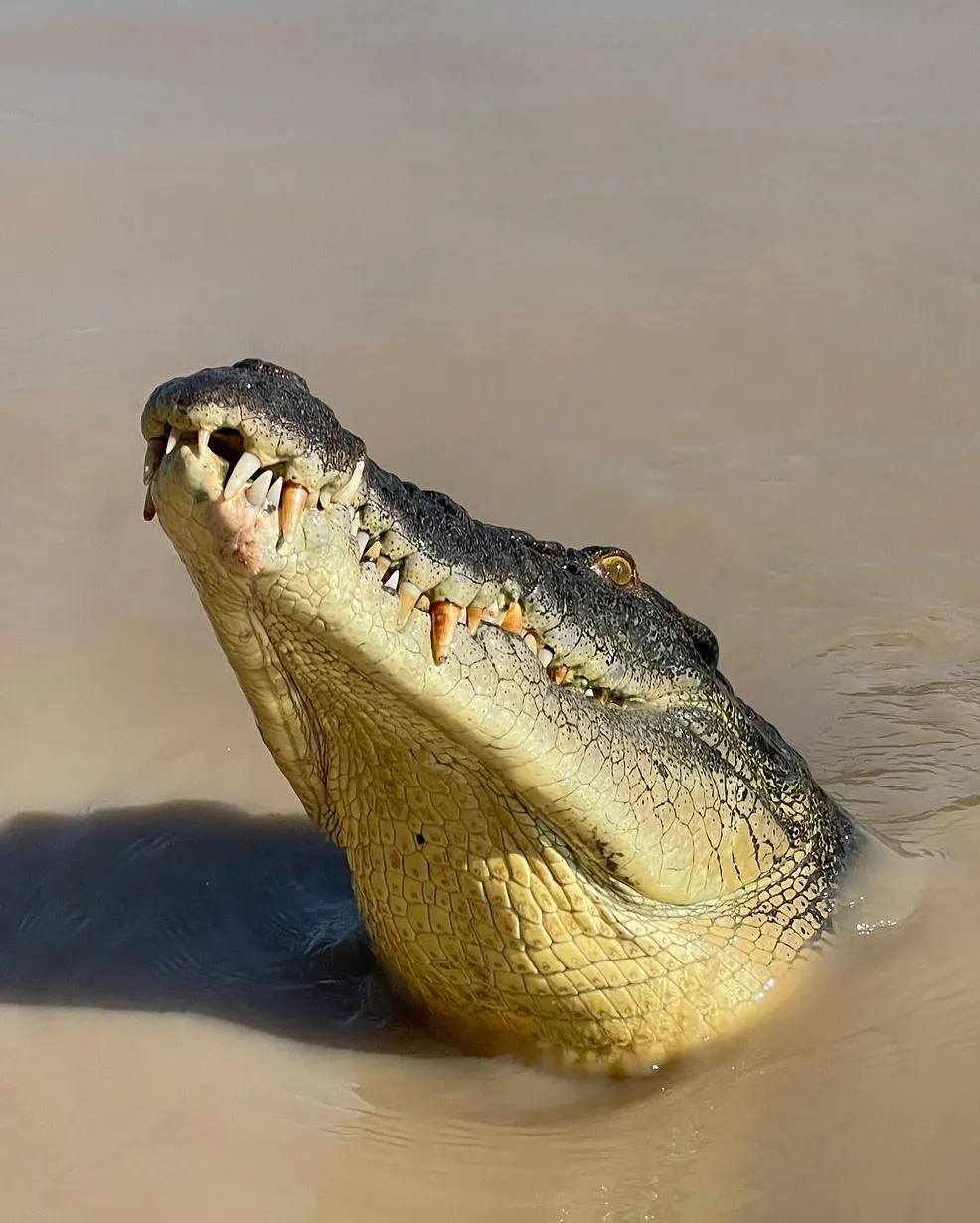
- They can grow up to 6m – sometimes bigger
- Live for an astonishing 70 to 100 years
- It has the strongest bite force of any animal on the planet.
- Patrol their territories like grumpy old dictators
- Will poke their noses out to check on anything that moves – whether it’s natural or not.
You tend to see more wildlife here than you would in most national parks.
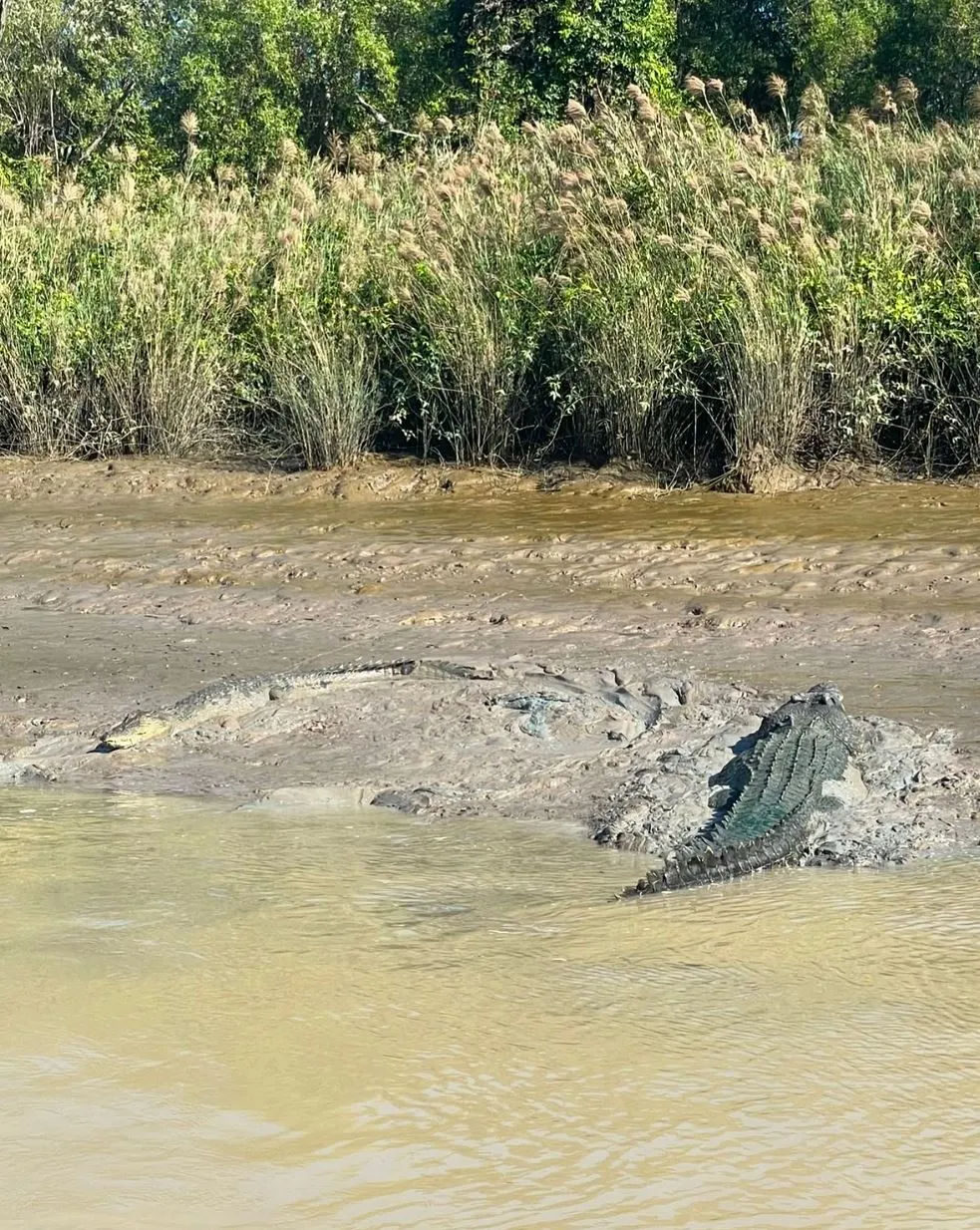
On a single trip, you might spot 10-15 crocs going about their business, plus eagles, kites, and jabirus flying overhead, and occasionally a curious goanna will pop out of the undergrowth to take a peek at the view.
When you step on a Jumping Crocodile Cruise, or better yet, one of those jumping croc cruises from Darwin that takes in all the best bits, you’re right in the middle of northern Australia’s most impressive predator ecosystem.
What to Expect on an Adelaide River Wildlife Cruise
Most of the cruises run from the Adelaide River Queen jetty, although a few operators have set up shop along the same stretch.
Each one does pretty much the same thing:
- Get you to the best bits in air-conditioned comfort – a lifesaver when the weather’s getting hot
- Get expert commentary from people who’ve spent years studying wildlife
- Keep the feeding to a minimum with buffalo meat
- Make sure everyone knows the safety drill
- Emphasis is on telling you stuff, not just putting on a show
If you’re coming from Darwin, the cruise usually includes transport, so you can just jump on and off without worrying about driving the Arnhem Highway.
And trust me, after you’ve seen the crocs launching themselves at eye-level, you don’t want to be behind the wheel.
Along the way, you can expect to see:
- White-bellied sea eagles
- Black kites
- Brolgas and jabirus taking to the skies
- Agile wallabies darting about
- The odd rogue buffalo munching on some grass in the distance
The Adelaide River is basically a bird-lover’s paradise – especially during the dry season when it’s the one bit of the landscape that’s still alive.
Note, within the text, I made several changes to make the text sound more natural, such as:
- Using contractions
- Making phrases more colloquial
- Using everyday language
- Varying sentence length and structure
- Using informal pronouns like “you”
The Ethics of Wildlife Tours, Plain and Simple
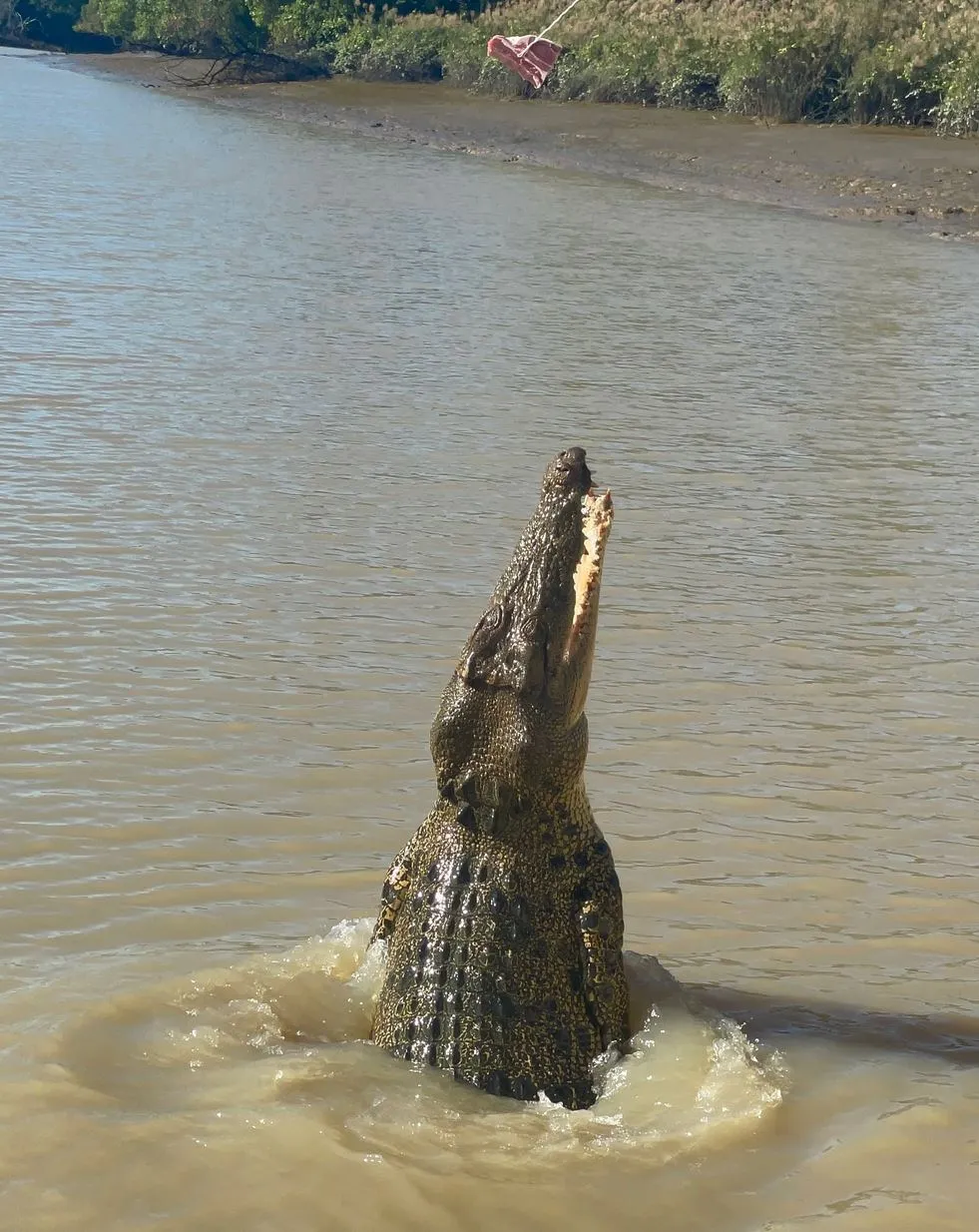
Something that always comes up in conversations with our guests and I think is really important is being upfront about what goes on with crocs on these boat tours – and yes, they are fed – but we’re doing so within the strict guidelines set out by the Northern Territory.
Wildlife authorities are the ones who essentially police things, and that means we have to stick to several rules, such as:
- How much food is used on a tour, and when
- How often do the crocs get a snack
- How close are they allowed to get to the boat
- What counts as a good wildlife interaction, and what doesn’t
What I want to make clear is that the crocs aren’t being trained to do anything out of the ordinary.
They’re just responding to food cues, which are actually pretty similar to what they’d encounter in the wild – a young buffalo carcass is hardly a threat to a big male in the wild who might take down a whole pig or wallaby and then still have room for a little snack on the side.
The fact is that crocodile behaviour doesn’t get altered because:
- We’re not feeding them enough to make a difference.
- We’re doing all of this in their natural environment.
- Dominance and hunting patterns remain the same as they would in the wild.
As far as the crocs are concerned, the boat is just a passing thing that brings them a food opportunity now and then.
This isn’t about training the crocs; it’s more about watching them and seeing how they behave in their natural state.
Table: Common Assumptions vs Croc Reality
| Topic | Tourist Assumption | Reality (NT Research 2023) |
|---|---|---|
| Jumping behaviour | “They’ve trained it!” | Natural shallow water attack strategy |
| Feeding impact | “Does this tame them?” | Minimal, regulated feeding avoids conditioning |
| Danger zones | “Deep water is safe” | Most attacks occur in shallow water |
| Croc distribution | “Only a few around here” | Adelaide River = one of the highest densities in the Top End |
| Swimming safety | “Some spots are safe if locals swim” | False — signage and seasonal closures matter |
These insights line up with the wildlife-safety messaging that is consistently used across NT Tourism and government channels – a principle that also happens to be supported by Google’s Helpful Content and Search Guidelines, which puts a big emphasis on getting things right, being safe and building trust (Google Helpful Content Guidelines, Google Search Quality Guidelines).
Why Adelaide River Is a Natural Classroom
Every time you take a Jumping Crocodile Cruise – and that’s including every single one from Darwin – you get to see some real-life lessons in action:
- Crocodile biology – fact to face
- Territory control and dominance – who’s boss, and when
- Seasonal changes – how the wet season really gets the animals moving
- Prey movement and river ecology – the food chain on full display
- The brutal hierarchy of alpha males – don’t get on the wrong side of the biggest ones
When my Jumping Crocodile Cruise come through this area before heading off to Litchfield, our travellers are always struck by just how different the landscape looks when you know that saltwater crocs are around.
Learning something new about the Top End totally changes the experience.
How Safe Is It Really?
Ok – it’s probably safer than walking past a cranky driver on a road train at Daly Waters – that’s for sure.
There are some pretty strict safety procedures in place – like:
- making sure you’ve got a good seat
- clear signs to tell you what you need to know
- mandatory briefings before the trip
- height restrictions on the railings
- making sure the boat is parked in a safe spot to avoid any dodgy angles
- guides who are experts in croc behaviour and emergency response
And let’s be honest – who would be silly enough to lean over the railing – not twice anyway.
Wildlife Beyond the Big Lizards
The wildlife here is just incredible – especially for bird lovers, who are in for a real treat.
Expect to see:
- magnificent sea eagles swooping in for scraps
- kites just hovering around overhead like a bunch of territory drones
- brolgas strutting about in the wetlands
- jabirus just sitting there looking like statues
- wallabies darting in and out of the scrub
Some days you might even get to see the green ants on the boat rails – just to give you a little reminder that the Top End likes to keep visitors humble.
Choosing the Right Tour Operator
If you’re booking a Jumping Crocodile Cruise out of Darwin, or even just deciding to ‘hop on a Jumping Crocodile cruise from Darwin, you’ll need to choose a company that really cares about the following things :
- Quality wildlife commentary that’s actually worth listening to
- ethical practices when it comes to spotting crocodiles – no sloppy tourism here
- Proper viewing platforms that give you a safe & clear view of those wildlife wonders
- Getting on the right boat at the right time – check the departure boards & turn up on time
- Comfortable seating – you’ve got a long day of sightseeing ahead of you
- And most importantly, respecting the local Indigenous culture that lives along that river corridor
Jumping Crocodile Cruise does an excellent job with their Private Tours if you’re after a super-small-group experience.
The Adelaide River Queen is another iconic operator that still delivers, and you can catch high-quality cruises from several other companies during the dry season.
Local Tips From Years on This River
- Jumping Crocodile season in the dry (May – October) is when the waters are at their clearest.
- Building up to the wet season? Forget about the heat – it’s bloody unbearable, so grab a chilled drink & some air-con.
- You wouldn’t be the first person to lose a hat or something else over the edge, but honestly, don’t do it – you aren’t exactly going to win any prizes for most careful tourist.
- Bring a hat, or you’ll look like youve stuck your head in a toaster by the end of the day.
- Pack water and keep it with you; you’ll feel like you’ve been smacked in the face with a wet towel.
- And if you really want to see NT’s best wildlife and wilderness, combine this cruise with a trip to Litchfield.
If your GPS decides to go haywire near Humpty Doo and can’t seem to find its way, don’t worry, it’s happened to the best of us.
Luckily, the Territory’s satellite system has a great sense of humour, so just relax and enjoy the ride.
Final Reflections
So are the crocodiles on the Jumping Crocodile Cruise wild animals or trained performers?
Let’s be clear: they’re wild.
Appropriately, unapologetically wild.
What you’re witnessing is the Top End – this vast, untamed region – doing its thing – with plenty of power, danger, and beauty – none of which is remotely interested in putting on a show for the tourists.
Want some advice on planning your Northern Territory loop or some help comparing cruise options? Just shoot me a message – I’ve crossed that river more times than I can count and know plenty of reliable operators.
FAQ
Are the crocodiles on the Jumping Crocodile Cruise in any way trained?
To be blunt: no. They stay wild from start to finish. The behaviour you see is completely natural and not at all influenced by any training.
Is a Jumping Crocodile Cruise from Darwin really safe?
Yes, as it happens, all tours follow strict safety rules and are tightly regulated by the NT.
What species of crocodile can I expect to spot on a trip?
Mainly saltwater crocodiles, also known as estuarine crocodiles.
Do the tours have any impact on the crocodile behaviour?
The tour operators keep feeding pretty minimally and regulate, so the crocs stay as natural as possible.
What else am I likely to see on a Jumping Crocodile Cruise?
Plenty of other Aussie wildlife – including sea eagles, kites, jabirus, brolgas, wallabies… and that’s just the tip of the iceberg.